
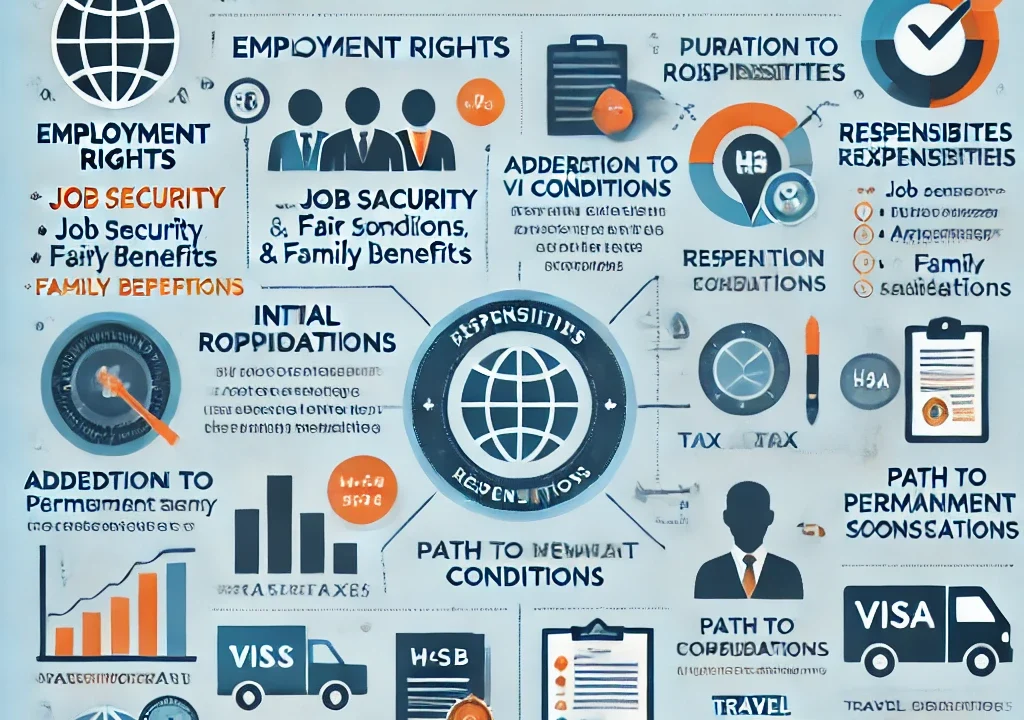
Securing an H-1B visa is a significant achievement for foreign workers looking to advance their careers in the United States. However, it’s essential to understand the rights and responsibilities that come with this visa status to ensure a smooth transition into your new role and life in the U.S. Here’s what you can expect after obtaining your H-1B visa.
1. Employment Rights
Job Security
Once you secure your H-1B visa, you have the right to work for the employer who sponsored your application. You cannot work for any other employer unless they file a new H-1B petition on your behalf.
Fair Treatment
H-1B visa holders are entitled to fair treatment under U.S. labor laws. This includes:
- Equal Pay: Employers must pay you at least the prevailing wage for your occupation in your area, ensuring you are compensated fairly compared to U.S. workers in similar positions.
- Working Conditions: You have the right to work in safe and healthy conditions, protected from workplace discrimination or harassment based on race, nationality, gender, or other protected categories.
Family Benefits
Your spouse and children under 21 may accompany you to the U.S. under the H-4 visa category. H-4 visa holders can attend school, and some may be eligible to apply for work authorization.
If you need more explanation or more information, you can book a consultation and speak to Happy Face
2. Responsibilities as an H-1B Visa Holder
Adherence to Visa Conditions
You must adhere to the conditions of your H-1B visa, which include:
- Employment with the Sponsoring Employer: You are only permitted to work for the employer who sponsored your H-1B visa. Any change in employment requires a new H-1B petition from your new employer.
- Maintaining Status: You must maintain your H-1B status by continuing to meet the requirements, such as performing the job outlined in your visa application.
Reporting Requirements
You are required to notify your employer and the U.S. Citizenship and Immigration Services (USCIS) of any significant changes in your circumstances, such as:
- Change of Address: Notify your employer and USCIS within 10 days of moving to a new address.
- Changes in Employment: If you change jobs, your new employer must file an H-1B petition, and you must not start working until it is approved.
3. Duration of Stay
Initial Duration
The H-1B visa is typically granted for a period of up to three years, which can be extended to a maximum of six years. After this period, you must leave the U.S. unless you apply for another visa type or seek permanent residency.
Extensions
If your employer wishes to extend your employment beyond the initial period, they must file for an extension before your current visa expires. Documentation proving the continuation of your employment and compliance with visa requirements will be necessary.
4. Path to Permanent Residency
Green Card Sponsorship
H-1B visa holders may be eligible for employer-sponsored green cards (permanent residency) if their employer is willing to sponsor them. This process can take several years and involves several steps, including:
- Labor Certification: The employer must prove that there are no qualified U.S. workers available for the job.
- I-140 Petition: After securing labor certification, the employer must file an immigrant petition on your behalf.
- Adjustment of Status: Once the I-140 petition is approved, you can apply for a green card if a visa number is available.
If you need more explanation or more information, you can book a consultation and speak to Happy Face
5. Compliance with Tax Obligations
Tax Responsibilities
As an H-1B visa holder, you are considered a resident for tax purposes if you meet the substantial presence test. You are required to file U.S. income tax returns and may be subject to federal, state, and local taxes. It is essential to:
- Keep Accurate Records: Maintain records of your earnings and any taxes withheld.
- Consult a Tax Professional: Seek assistance from a tax professional who understands the complexities of tax obligations for foreign workers.
6. Travel Considerations
International Travel
If you plan to travel outside the U.S. while on an H-1B visa, keep the following in mind:
- Visa Stamping: You may need to get your visa stamped at a U.S. consulate before re-entering the U.S. Ensure that your visa is valid and that you have all necessary documents, including your employment offer letter and proof of your H-1B status.
- Re-entry Requirements: You must present your H-1B approval notice (Form I-797) and valid passport upon re-entry to the U.S.
7. Employment Dispute Resolution
Filing Complaints
If you believe your rights as an H-1B worker have been violated, you can file a complaint with the U.S. Department of Labor (DOL) or seek legal assistance. Grounds for complaints may include:
- Wage violations
- Discrimination
- Retaliation for asserting your rights
Conclusion
Securing an H-1B visa opens up numerous opportunities for professional advancement in the United States. However, it comes with specific rights and responsibilities that you must understand and adhere to in order to maintain your visa status. By being aware of your employment rights, complying with visa conditions, and navigating the complexities of life as an H-1B visa holder, you can successfully establish your career in the U.S.
If you need more explanation or more information, you can book a consultation and speak to Happy Face
Disclaimer


